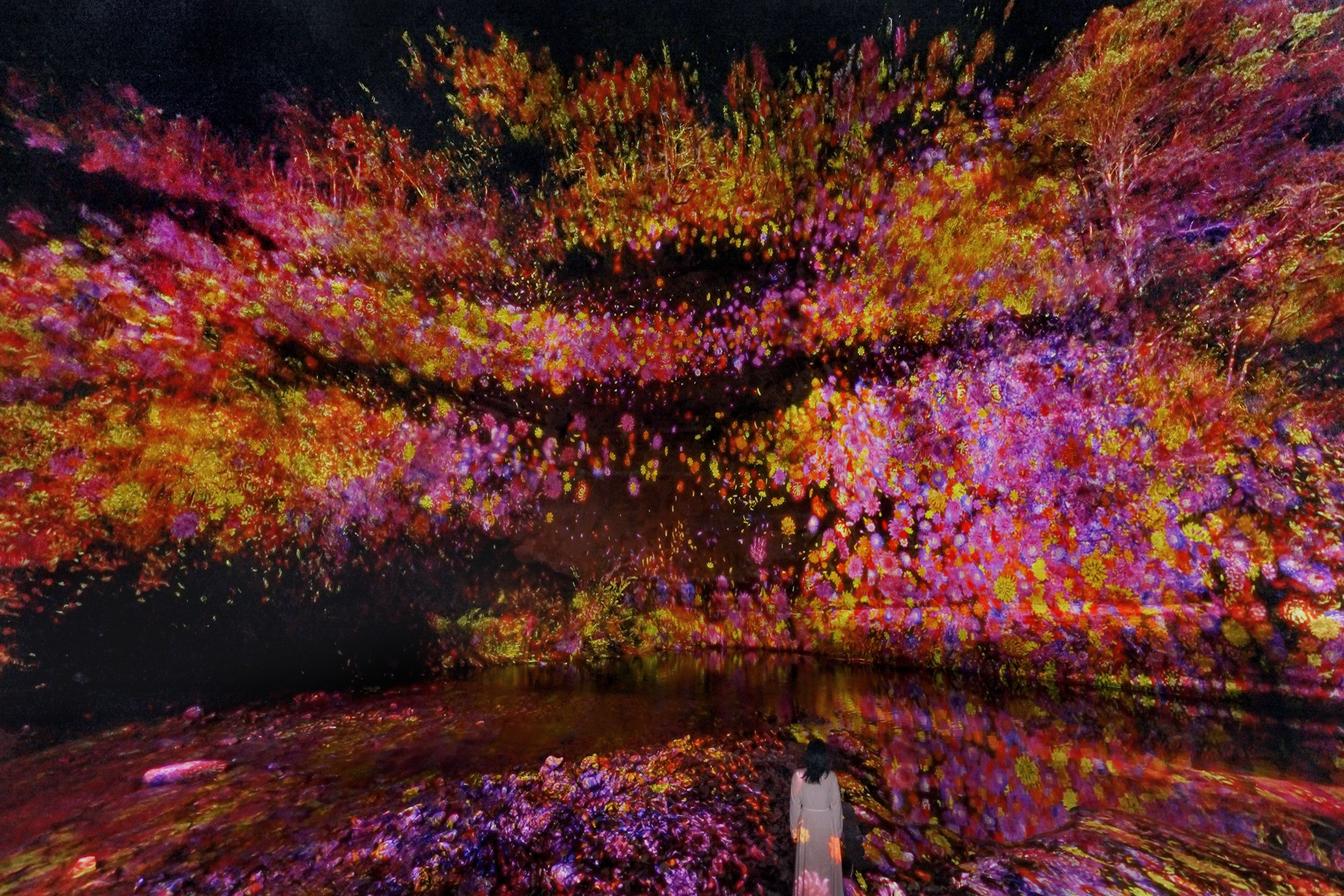
The Materialization of Time
The Materialization of Time
Deep in the valley, in the ancient forest, a type of lichen called umenokigoke— a symbiotic organism of fungi and algae—grows on the trunks of old trees. It represents the ultimate open system.
The lichen survives on sunlight and rain alone, entering a dormant state without water. It can even survive in outer space. While it enjoys a near-eternal lifespan in an open system with sunlight and rain, it quickly dies if the air is even slightly polluted, such as from exhaust fumes.
Growing at a slow pace of only 1mm to 5mm per year, umenokigoke is an existence for which modern internet searches only return methods on "how to remove it." However, people of the Edo period called the unique texture of this lichen koshoku (antique color) or "weathered by time," and regarded it as possessing the highest virtue—a presence of long time that they could never create themselves.
Umenokigoke is perhaps The Materialization of Time.
In the past, masters such as Kanō Eitoku, Maruyama Ōkyo, and Itō Jakuchū (1716–1800) painted countless blue-green dots on the trunks of old trees in their paintings. Those dots were proof that the trees had lived for a thousand years, a sign that determined the prestige of the painting.
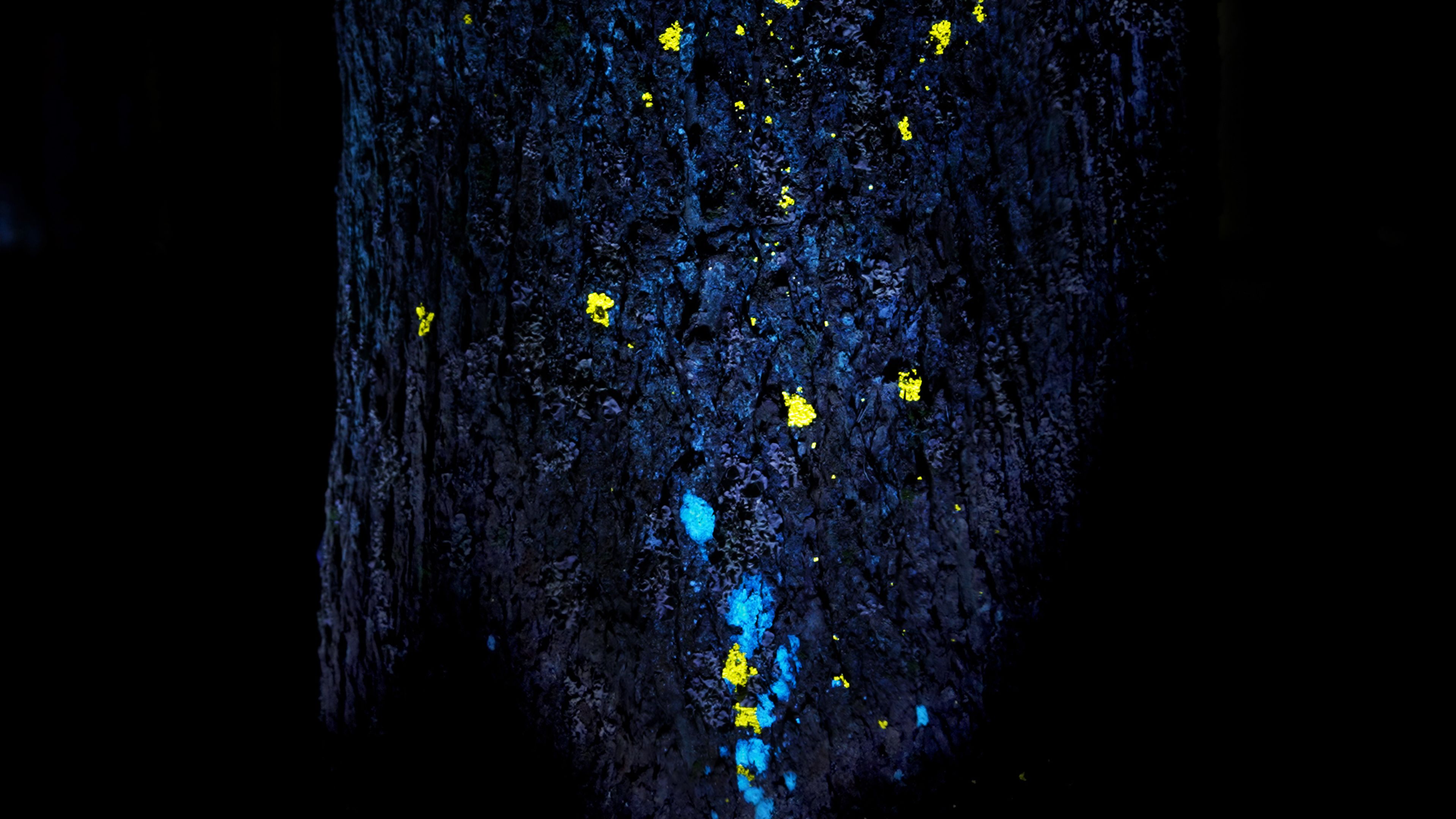
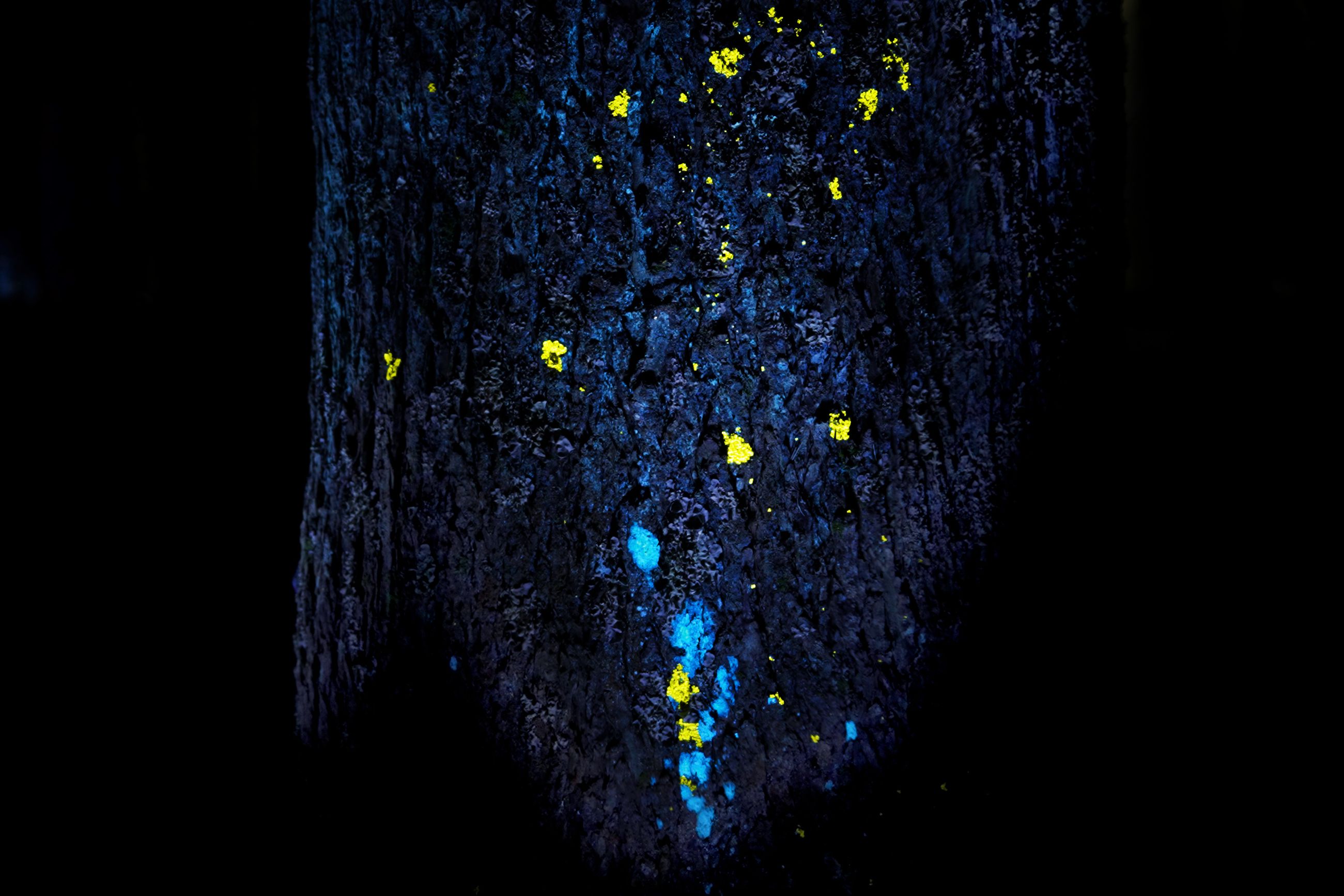
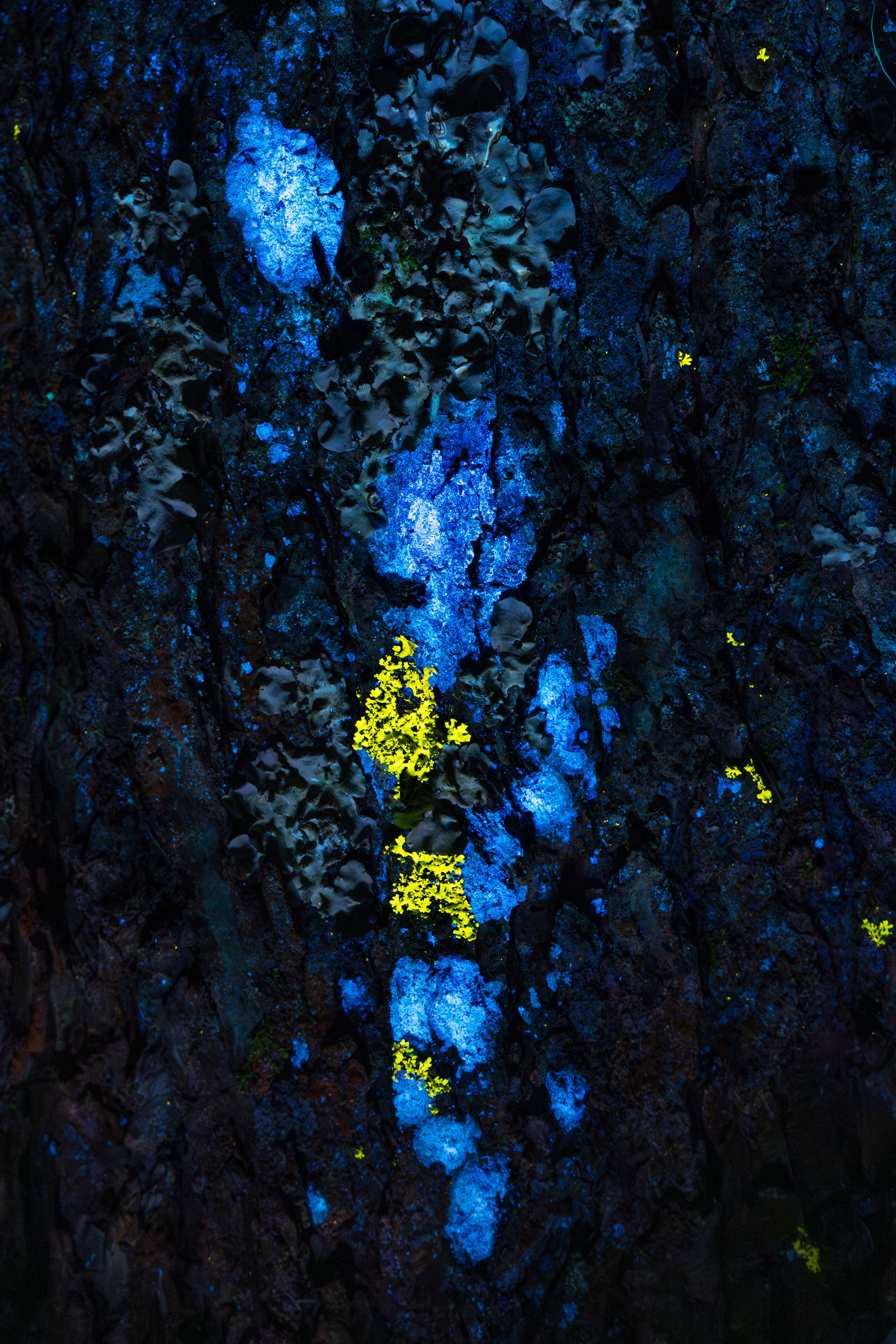
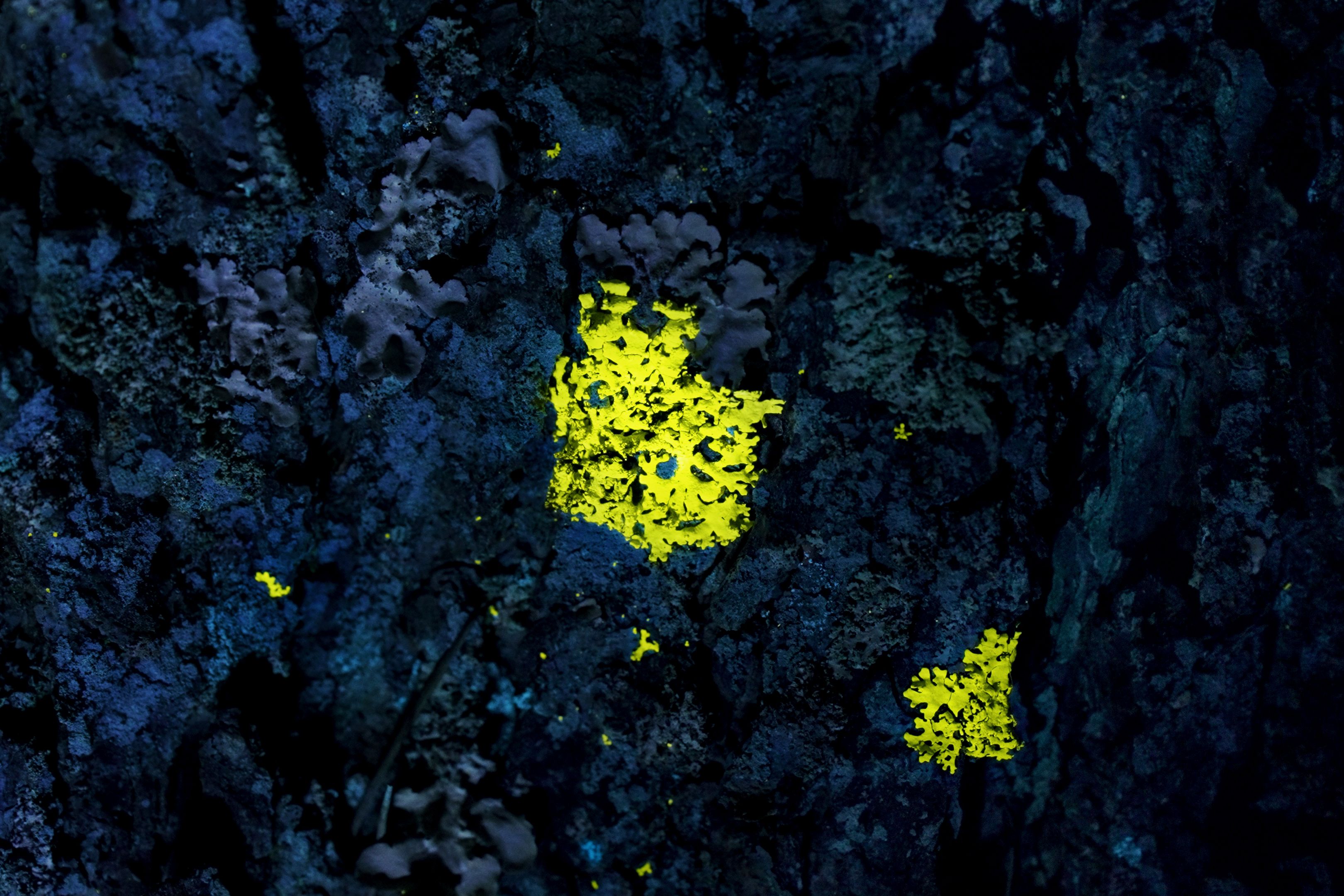
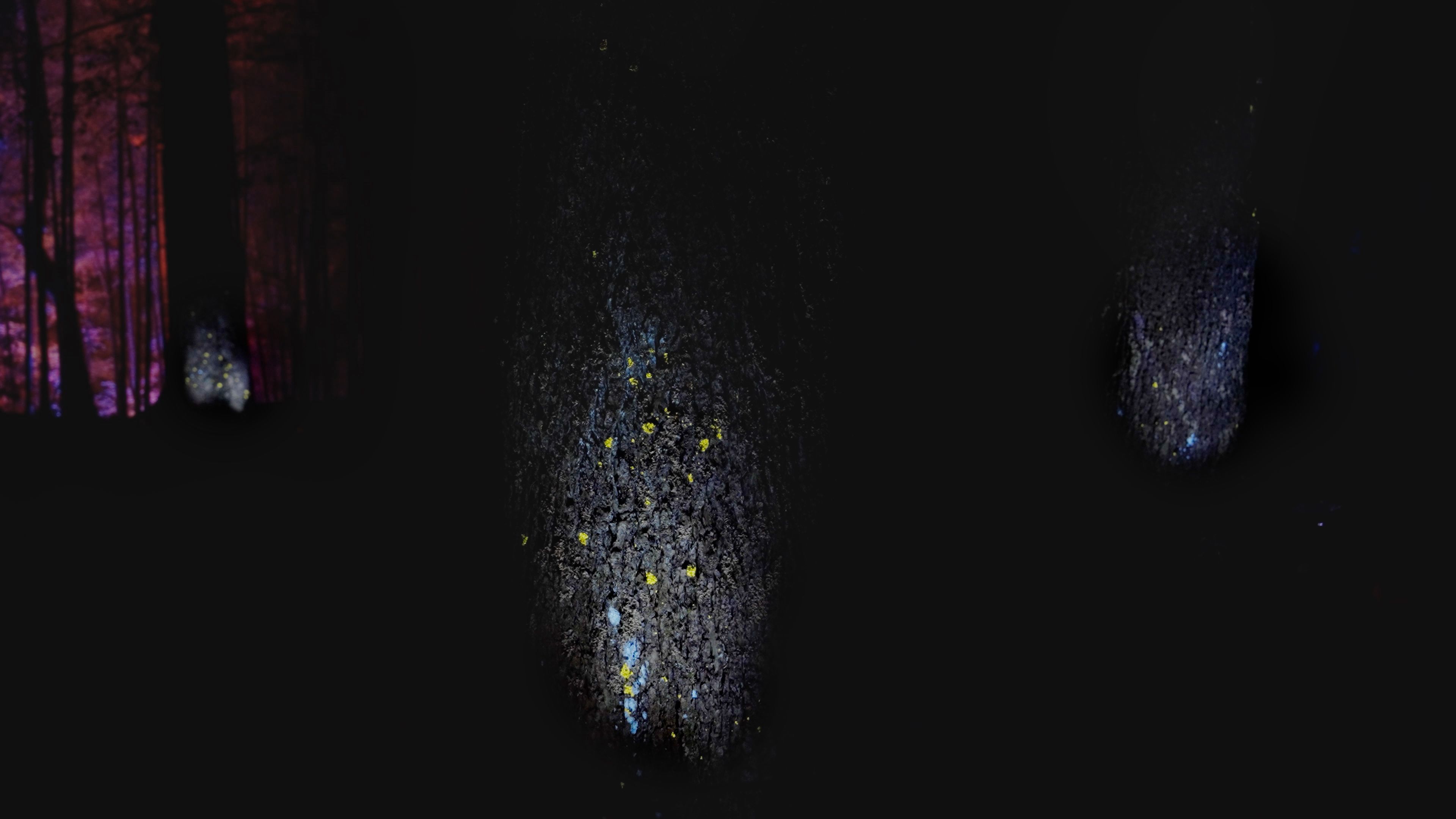
Naturally, some types of umenokigoke emit yellow and blue light in the presence of ultraviolet light, but this is not visible during the day due to the strong light from other sources.
Under ultraviolet light, the vivid glow of these lichen flickers in the dark, capturing the trail of life that the forest has painted over decades and centuries.
It is a Time Painting, where the radiance, materialized over long periods of time, emerges.